

The relationship between patients, providers, and payers is evolving — fast. As quality expectations rise and regulatory oversight tightens, the next two years will reshape how healthcare networks are built, validated, and managed.
For health plans, the message is clear: access, accuracy, and accountability will be the defining measures of network performance in 2026.
Below are the top five trends that will have the greatest impact — and how to prepare for them today.
- Network Adequacy Will Face Increased Scrutiny
Regulators are moving beyond annual filings and into ongoing adequacy oversight — particularly for high-volume or high-impact counties.
Key changes driving this shift:
- New adequacy monitoring requirements tied to enrollment growth
- Stricter standards related to appointment wait times
- Greater focus on specialty access, especially in underserved markets
This means plans must build proactive network visibility, grounded in timely provider intelligence — not historical assumptions.
📌 Success will rely on market prioritization, strategic outreach, and stronger provider engagement.
- Data Accuracy Becomes a Compliance Imperative
Accuracy isn’t a nice-to-have — it’s increasingly a regulated mandate.
Expect:
- More rigorous verifications for directory listings
- Shorter update windows for provider disclosures
- Enforcement tied to consumer protection and transparency
Audit fatigue is real — but outdated provider data puts plans at risk for compliance penalties and network perception issues.
📌 Modern operations will require clean rosters, automated validation, and real-time performance insights.
- Independent Reviews for QHP Certification
To reduce variability in oversight, CMS is broadening the role of independent network evaluations as part of Qualified Health Plan certification.
This includes:
- Third-party adequacy reviews
- Validation of network participation status
- Standardized assessment methodologies across markets
These reviews will expose operational gaps that bulk reporting can’t hide.
📌 Plans must ensure contracting and credentialing data withstands external scrutiny.
- Technology Will Drive Patient-Centric Access
Digital tools will reshape how consumers find care — and how networks are measured.
expected growth areas include:
- Intelligent provider search tools with cost + quality transparency
- Accessibility enhancements (language, virtual care, transportation)
- Interoperable systems designed around patient choice
The networks that perform best will support:
Right care • Right place • Right time — without friction
📌 This shift requires collaboration between IT, network ops, and experience teams from the start.
- Payment Models Shift Further Toward Outcomes
Fee-for-service models continue to decline in favor of value-based arrangements that prioritize outcomes and risk-sharing.
Plans will need:
- Clear visibility into provider performance
- Engagement strategies that promote quality participation
- Specialized networks built around chronic and high-impact conditions
Provider relationships will increasingly define operational excellence.
📌 When providers succeed — networks succeed — patients succeed.
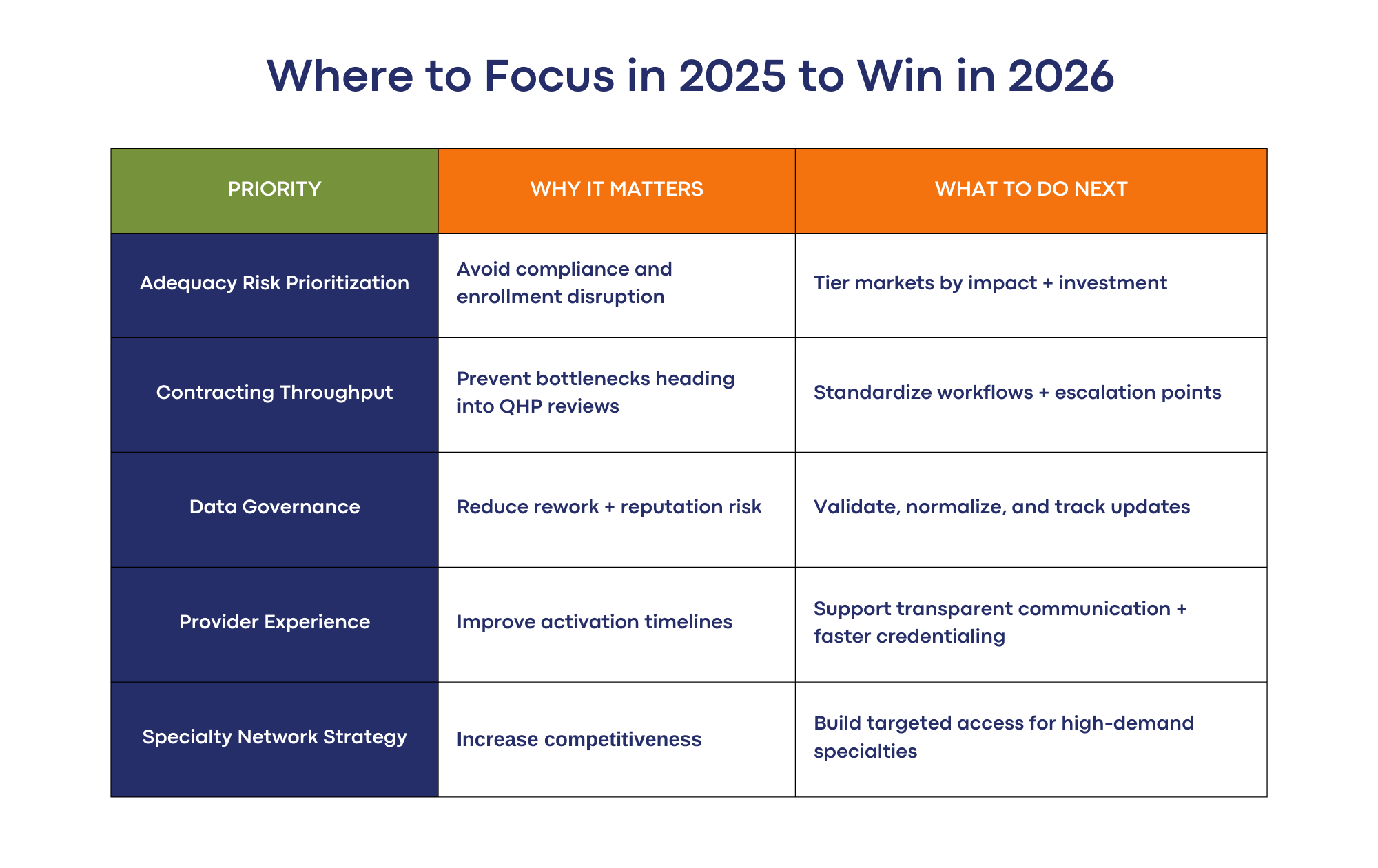
The Bottom Line
2026 will reward plans that plan ahead, leverage analytics, and streamline provider-facing processes. Those that rely on outdated workflows will struggle under increased regulatory pressure.
Operational readiness isn’t optional — it’s a strategic advantage.
How Provider Partnership Can Help
We help plans:
- Prioritize adequacy exposure across markets
- Accelerate contracting and credentialing throughput
- Maintain accurate provider data with confidence
- Build high-performance specialty networks
- Strengthen provider relationships and activation
Whether you’re stabilizing existing networks or building for growth, we deliver clarity, momentum, and measurable progress.
📩 Ready to prepare for 2026? Let’s schedule a session aligned to your Q4/Q1 priorities.